











Irreverent Reviews
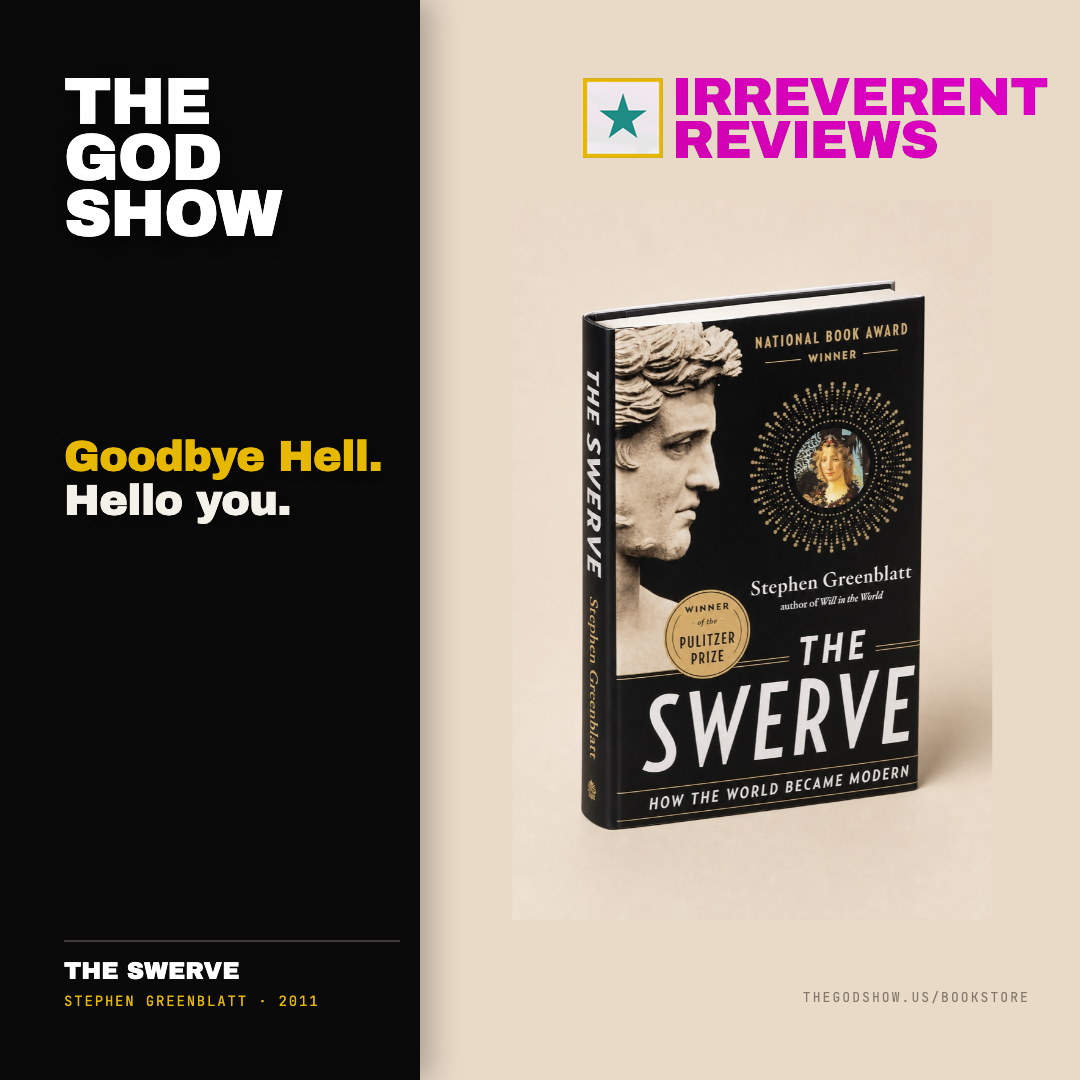
The Swerve
Stephen Greenblatt · 2011
A breezy 300-page heist flick disguised as history that claims one dusty poem accidentally invented you.
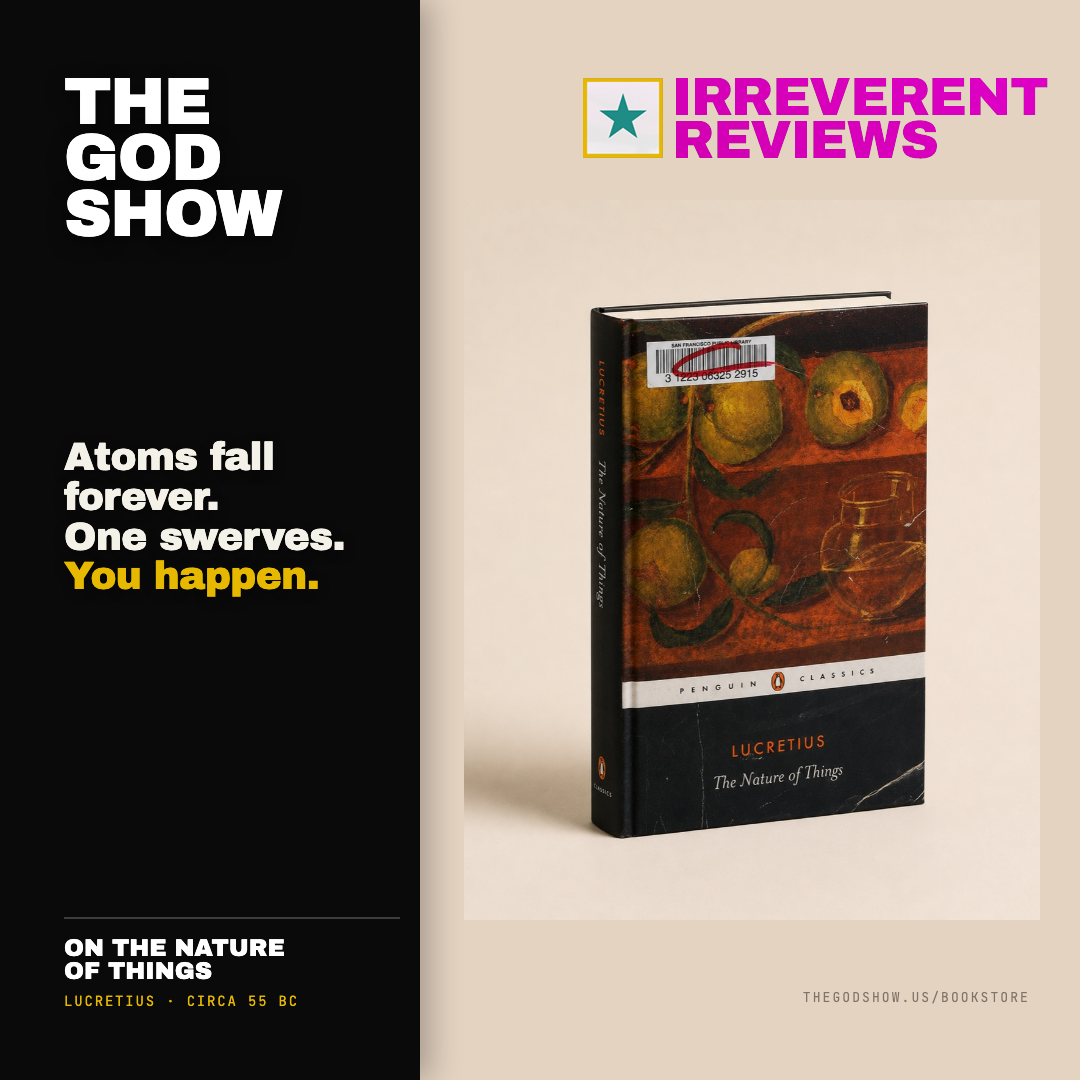
Buy on Amazon →Stephen Greenblatt, Harvard's smooth-talking literary detective, spins a bestseller that reads like a philosophical Indiana Jones caper. While the Middle Ages were busy with plagues, flagellation, and "don't think too hard," a papal secretary named Poggio Bracciolini goes manuscript-hunting in 1417 and hits the jackpot: Lucretius' On the Nature of Things, a 2,000-year-old Epicurean banger that had been moldering in a German monastery. Greenblatt's big swing? This poem's rediscovery was the intellectual plot twist that yanked Europe into modernity—atoms, pleasure, skepticism, and all.
Atoms, Swerves, and Zero Afterlife Vibes
Lucretius' vibe: the universe is just swerving atoms in the void. No gods pulling strings, no hellfire, no immortal soul sweating in purgatory. Life's goal? Maximize pleasure, minimize pain, and laugh at death because you won't be around to notice. The "swerve" (clinamen) is the random atomic veer that allows free will instead of robotic fate. Greenblatt traces this forbidden transmission like a conspiracy theorist on espresso: from dusty scriptorium to Montaigne's essays, Jefferson's library, and every modern bro who says "YOLO" without knowing its ancient Latin roots.
Poggio, the ultimate Renaissance hustler, risks heresy for a good read. Monks get painted as gloomy book-hoarders; humanists as quill-wielding rebels smuggling dangerous ideas past the Vatican bouncers. Greenblatt's scenes pop—imagine monks side-eyeing this guy who'd rather read pagan poetry than pray. It's subversive, cheeky, and makes intellectual history feel like a caper.
Punchy, Seductive, But a Little Too Neat
The book's strength is its zip: Greenblatt turns manuscript recovery into high drama and makes you root for atoms over angels. It's funny in that wry, academic-burn way—watching Christianity's doom-and-gloom get bodied by a poem that basically says "touch grass and enjoy the wine."
But yeah, it swerves a bit hard. One lost text as the spark of modernity? Medieval Europe wasn't a total intellectual black hole, and Greenblatt polishes the narrative for maximum narrative glow. Still, the core thrill holds: ideas are sneaky, dangerous, and occasionally world-altering.
In 2026's mess of culture wars, book bans, and algorithm-fed certainty, The Swerve lands like a cheeky reminder. The battle between "don't question" and "let's see what atoms do" never stopped—it just moved to X and Substack. Small intellectual nudges can still avalanche everything.
“Ideas are sneaky, dangerous, and occasionally world-altering.”
Verdict
The Swerve won't turn you into an Epicurean party animal, but it'll make you smirk at how one lucky monastery raid helped birth the skeptical, pleasure-seeking mess you are today. Witty, elegant, and subversively fun. Pour the wine Lucretius would've approved of, you glorious clump of swerving atoms.